
In our previous analysis, we deconstructed the Erosion Benchmark; the personal inflation rate that acts as a silent tax on your wealth. Today we look at the most dangerous place to hide from that tax in our opinion, what we call the “mattress fallacy”.
Why hoarding buffers our economic engine

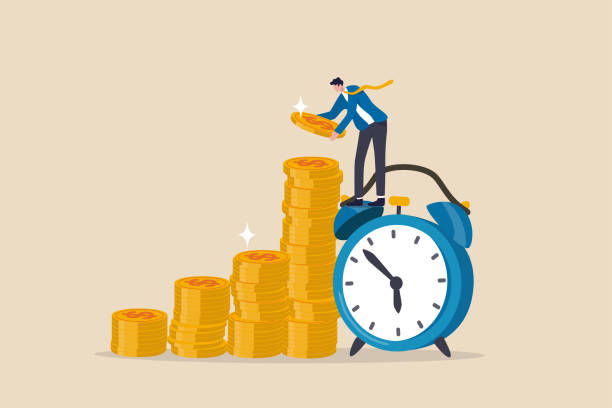
When consumers hoard their money by keeping it in its physical form, their money is effectively frozen; it isn’t being spent, nor is it being invested. From a macroeconomic perspective, this creates a friction point in the engine of growth.
However when this capital flows back into the banking system, it undergoes a transformation. By moving cash into the financial system, you improve bank liquidity, directly increasing the supply of capital available for loans. This “re-activation” of money makes it easier for businesses to expand and individuals to innovate.
By returning this money to the banks, you aren’t just protecting yourself from physical loss; you are improving the flow of money in the economy. This circulation is what drives stability and creates the very opportunities for growth that we, as investors, look to capture. An economy thrives on movement, not stagnation.
As we move through 2026, the headlines are a constant stream of volatility and geopolitical noise. For many, the instinct is to retreat to the sidelines, by moving capital into High-Interest Savings Accounts (HISAs) or GICs. It feels like entering a safe harbour. But in a world of persistent inflation, that safety is a mathematical illusion. You aren’t avoiding risk; you are simply trading uncertainty for a guaranteed, permanent loss.
The Purchasing Power Paradox
The Mattress Fallacy persists because Nominal Value is stable. If you tuck $100,000 away today, you will still have $100,000 next year. Your brain interprets this lack of movement as security.
However wealth is not a measure of currency units; it is a measure of Purchasing Power. While a stock market correction feels like a “crash,” the money in your mattress is a slow-motion wreck, you just don’t realise it yet.
- The Volatility Difference: An equity index can drop 20% in a year, but it possesses the structural mechanics to recover. History shows that productive assets, like companies that provide essential goods and services, eventually price in the new reality of the dollar.
- The Permanent Haircut: The mattress offers no protection against the Erosion Benchmark. Every 5% rise in your cost of living is a permanent 5% haircut to your cash’s utility. Once a dollar loses its ability to buy a Kw of power or a liter of fuel, that ability is gone forever. By staying in cash, you are holding an asset designed to dissolve.
The Yield Mirage: The Math of the Trap
To combat this erosion, many modern investors utilize 30-day Treasury Bills or GICs, a “sturdier mattress,” but a mattress nonetheless. While earning a 4.5% or 5% yield feels productive, it often fails the Recchia Report stress test once you factor in the “Net Real Return.”
Consider the math for a disciplined investor:
- Nominal Yield: 5.0%
- Taxation: Interest is taxed as ordinary income. (Assuming a net of ~3.3% after-tax).
- The Erosion Benchmark: If your personal inflation (rent, insurance, energy) is 6%, your Real Return is -2.7%.
If you are an average professional in Australia (earning between $45,000 and $135,000), your tax rate is 30% plus a 2% Medicare Levy, for a total of 32%.
Here is how we get to 3.3%:
- Gross Interest: $5.00$ (The full amount the bank pays you)
- The Tax Cut (32%): $5.00 × 0.32 = $1.60
- What’s Left: $5.00 – $1.60 = $3.40
(Note: We used 3.3% in the article as a conservative average, as many investors earn slightly more and move into the 39% tax bracket, which would leave them with only 3.05%).
The Market Blueprint: 30-day Treasury Bills are tools for Liquidity, not Wealth. They are where you park funds for a house deposit or an emergency fund. Mistaking “yield” for “growth” is the first step toward the Trapdoor. To fund a future that is more expensive than today, you need an engine, not a hiding place.
Why stocks win in the long game
The fundamental difference between your mattress and the market is how they respond to time.
- Persistent Erosion: Inflation is a compounding weight. A dollar bill cannot innovate, it cannot raise its prices, and it cannot optimize its margins. In a cash account, there is no “internal engine” to counteract the decay.
- Concurrent Recovery: Stocks are ownership stakes in living organisms. When input costs rise, management teams raise prices and cut waste. While a stock’s price might be eroded in the short term by market panic, its long-term value is tethered to its ability to generate profits in the current price environment.
The Opportunity Cost of the the “Waiting Tax”
The final part of the Mattress Fallacy is the waiting tax. Many say, “I’ll get back into the market when things settle down.”
History is a cruel teacher here. The market’s most explosive recovery days almost always occur in the middle of the worst news cycles. If you sit on your cash waiting for “clarity,” you miss the very windows of time that account for the vast majority of long-term wealth accumulation. You are betting against the recovery and by extension, you are betting against the growth of your own net worth.
As the legendary investor Peter Lynch famously put it:
“Far more money has been lost by investors preparing for corrections, or trying to anticipate corrections, than has been lost in corrections themselves.”
Lynch’s wisdom highlights the core of the Mattress Fallacy: the “safety” you think you are buying by waiting is actually the most expensive thing you can own. In the Australian market, missing just the 10 best days over a 20-year period can nearly halve your total retirement nest egg. You aren’t avoiding a crash; you are ensuring you miss the lift.
Think this sounds exagerreated?
The reason you can’t time this is that the best days are almost always clustered next to the worst days.
- Most of the ASX’s top 20 best trading days since 2000 occurred during the height of the Global Financial Crisis and the COVID-19 pandemic.
- The Paradox of this is that when the headlines are at their bleakest (exactly when people want to hide money under the mattress), the market often stages its most explosive recoveries.
If you miss just one day a year on average (the best day of each year), your annualized return is often halved. This simple lack of confidence can cost you massive annualized returns in the long run, crippling your investment celling.
Safety is Productive, Not Passive
The Market Blueprint demands that we recognize cash for what it is: a tool for today, but a trap for tomorrow.
- Cash is for your 6-month emergency fund.
- Equities (filtered for Quality and Profitability) are for the life you haven’t lived yet.
When you over-allocate to “safety,” you aren’t just betting against the S&P 500 or the ASX 200. You are betting that the world won’t get better, that companies won’t innovate, and that you won’t need more than you have today.
The data is clear, the math is unforgiving, and the waiting tax is real. Stop measuring your progress by the nominal digits in your savings account and start measuring it by your resilience against the erosion benchmark.
Don’t short yourself. Build the blueprint, embrace the volatility, and own your growth.
Know the market. Understand the world.
Join the Factor Insights Newsletter today: it’s free, data-driven, and designed for the disciplined investor
 Recchia Report: Know the Market, Understand the World
Leave a comment